Practice overview
I am a UK-based contemporary sculptor working across object-based, installation, and site-responsive practices. My work explores human–environment relationships, focusing on how systems of extraction, violence, and inequality are materially inscribed in bodies, land, and objects.
Working between studio production and socially engaged projects, I transform charged materials into sculptural forms that hold histories of labour, loss, and care. I am drawn to materials that already carry weight—objects shaped by domestic use, extraction, or social harm—and I work with them slowly, allowing their histories to guide form rather than be erased. Through sculpture and installation, I examine how ecological and social conditions shape both material processes and lived experience.
My practice moves between intimate, crafted objects and larger spatial or site-responsive works. Studio-based sculptures allow for close encounters with material and touch, while installations and socially engaged projects respond to specific landscapes, communities, or institutional contexts. Across these modes, I am interested in how sculpture can scale vast, often violent histories down to a register that can be encountered bodily—through proximity, tactility, and care.
Materials, transformation, and care
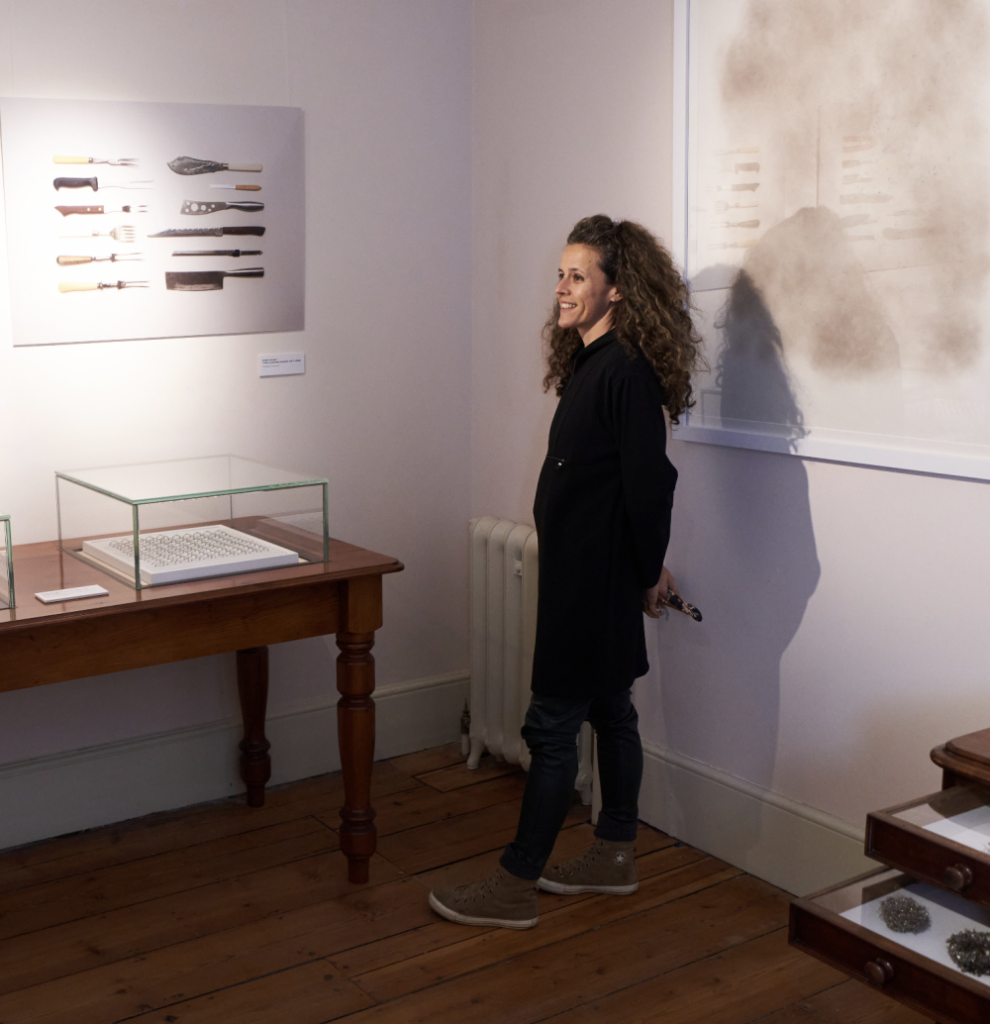
I come to this work as a mother, a woman, and a migrant, and as an ethical goldsmith attuned to the scars of extraction and exploitation. These are not abstract positions for me, but lived realities that shape how I approach making and matter. Materials in my work—police-confiscated knives, minerals linked to mining disasters, domestic objects worn through years of use—are treated as collaborators rather than resources, holding memory, resistance, and vulnerability.
Processes of transformation sit at the centre of my practice. Craft functions as a form of attention and responsibility: a way of slowing down, of inviting viewers close, and of opening space for difficult knowledge to be encountered through touch and beauty. I am interested in the tension this produces—the moment when seduction and discomfort coexist—and in how sculpture can hold grief and resilience without resolving them.
My work is informed by feminist and ecofeminist thinking, particularly practices that resist permanence and domination in favour of intimacy, repair, and relationality. I am drawn to the uncanny charge of old fairy tales, where care and threat sit side by side, and this tension runs through my work as a way of acknowledging the complexity of lived experience.
Biography
Arabel Lebrusan (Madrid, 1974) is a visual artist working in sculpture, installation, and performance, based in the UK. Her practice explores the material and emotional entanglements between humans and land, with particular attention to extractivism, ecological grief, and social histories embedded in matter.
In 2021, she was awarded a research fellowship at the Centre for Spatial, Environmental and Cultural Politics at the University of Brighton for her two-year project Toxic Waves. During her MA in Sculpture at the Royal College of Art (2023), she continued her research into extractivism through the lenses of ecofeminism, ecological grief, and social history.
Lebrusan has exhibited and developed projects in galleries, museums, and public contexts in the UK and internationally. Alongside her sculptural practice, she maintains a parallel background in ethical jewellery and socially engaged work, and regularly contributes to talks, workshops, and public discussions around art, extractivism, and care.