Swords into Ploughshares: Knives into Jewels. Touring Exhibition. UK
Collection: The Goldsmiths’ Company, London
Blunt Blades is an ongoing body of sculptural work that began in 2013 following the transfer of police-confiscated knives and weapons from Bedfordshire Police. Developed over more than a decade, the project examines how materials associated with violence and threat can be transformed through processes of care, labour, and responsibility without being neutralised or erased.
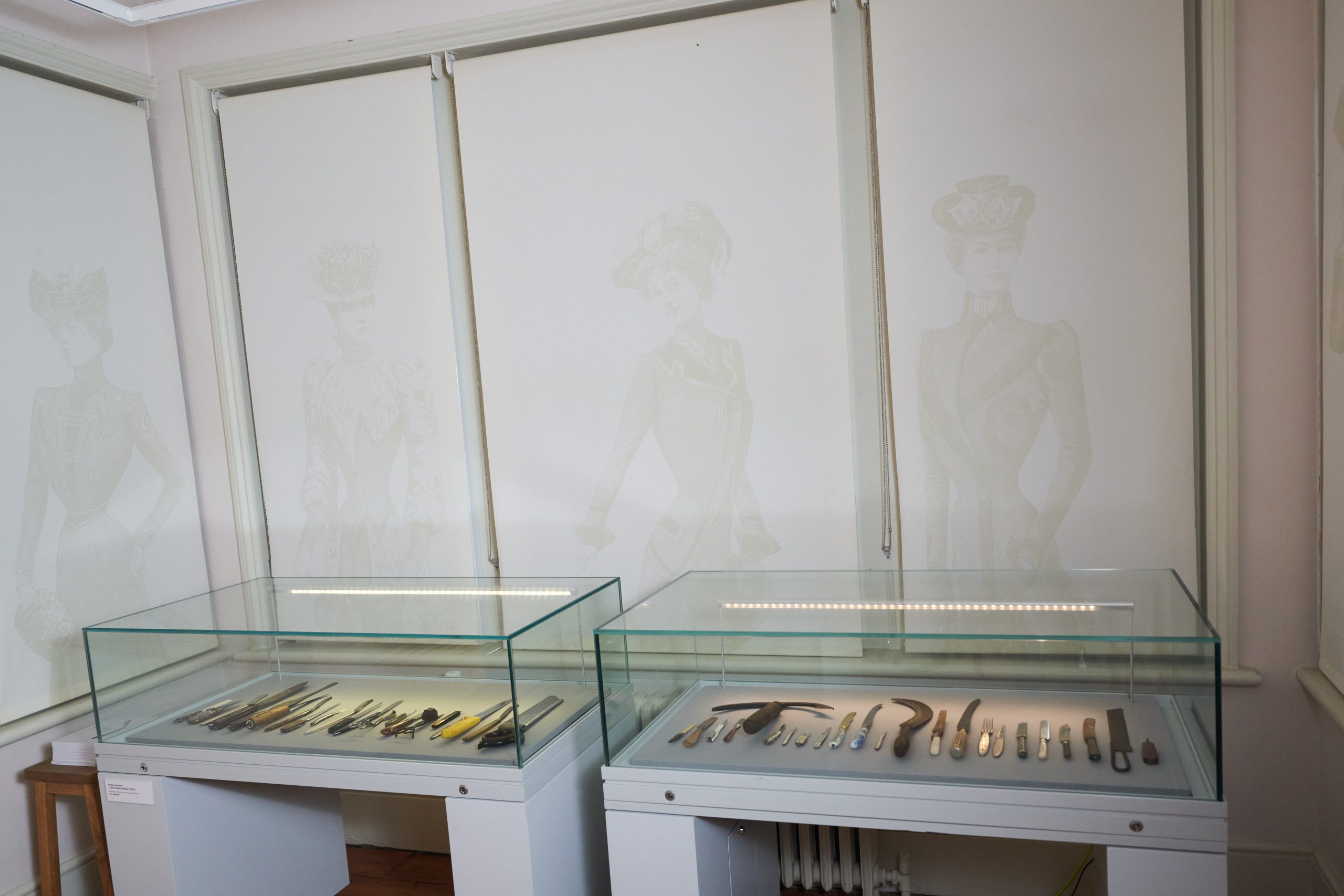
Working across sculpture, installation, photography, publication, and socially engaged formats, the body of work is grounded in direct engagement with material that carries social consequence. The knives are not treated as neutral raw material, but as objects marked by use, harm, and institutional control. Through forging, casting, documentation, and exchange, the works retain traces of their former function while entering new states of visibility and encounter.
Rather than resolving violence symbolically, Blunt Blades unfolds through multiple iterations that respond to different contexts, from museum galleries to community settings. What connects these works is an attention to repetition, restraint, and touch, and a commitment to working with material that cannot be separated from the conditions under which it was produced, carried, and used. The body of work has been exhibited at The Higgins Bedford and featured in Swords into Ploughshares: Knives into Jewels, a touring exhibition curated by Norman Cherry and Dauvit Alexander, hosted by the Glasgow School of Art School of Design. The body of work remains open and ongoing.
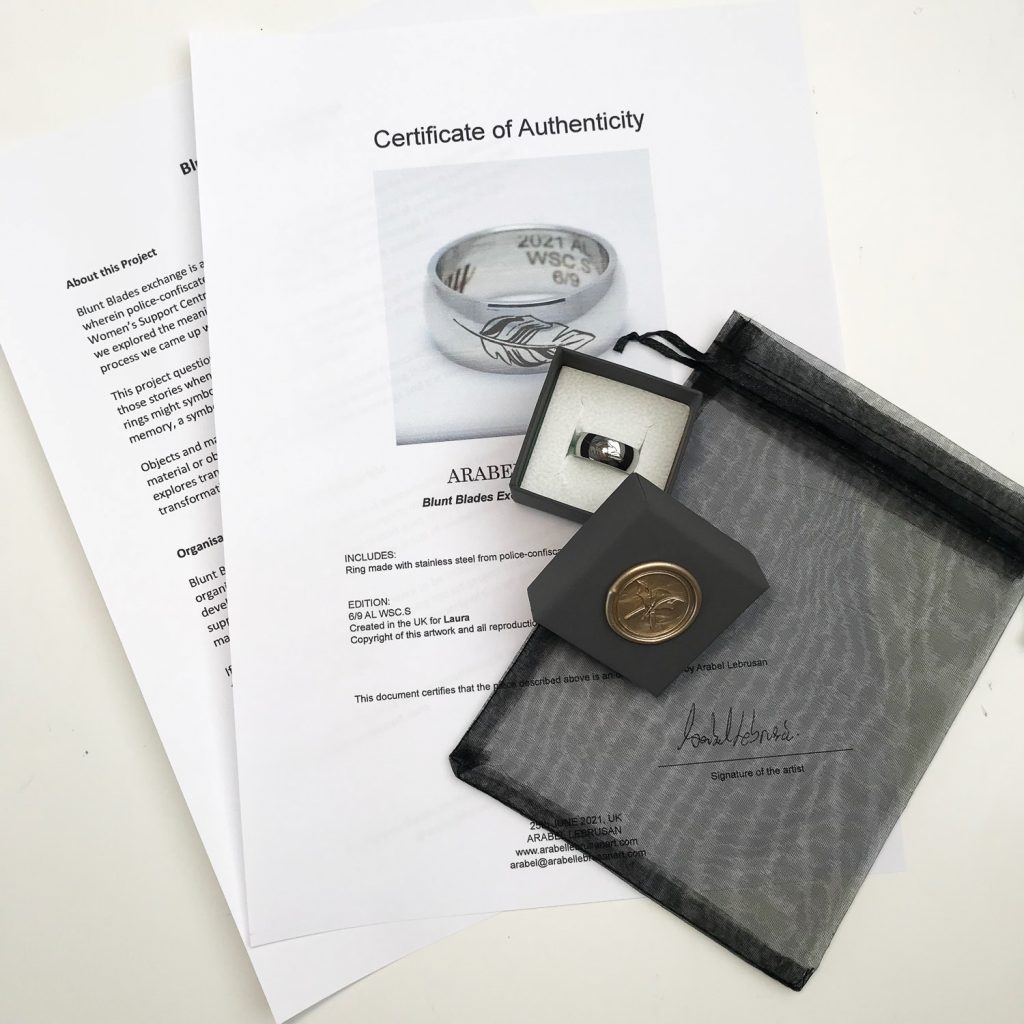
Rings made from mixed stainless steel sourced from confiscated knives, produced in a one-to-one relationship with recorded knife-murder statistics in England and Wales.
A participatory project developed with Quiet Down There and Women’s Support Centre Surrey, extending the body of work into collective exchange and dialogue.
A publication bringing together stories and reflections connected to individual knives, developed through collaboration and contribution.
Context & development
The body of work has been developed through collaborations with police forces, museums, galleries, and community organisations, and has been exhibited in gallery, museum, and public contexts in the UK. Its evolution reflects a long-term commitment to material ethics and to sculpture as a space where harm, responsibility, and care can coexist without resolution. Ongoing…